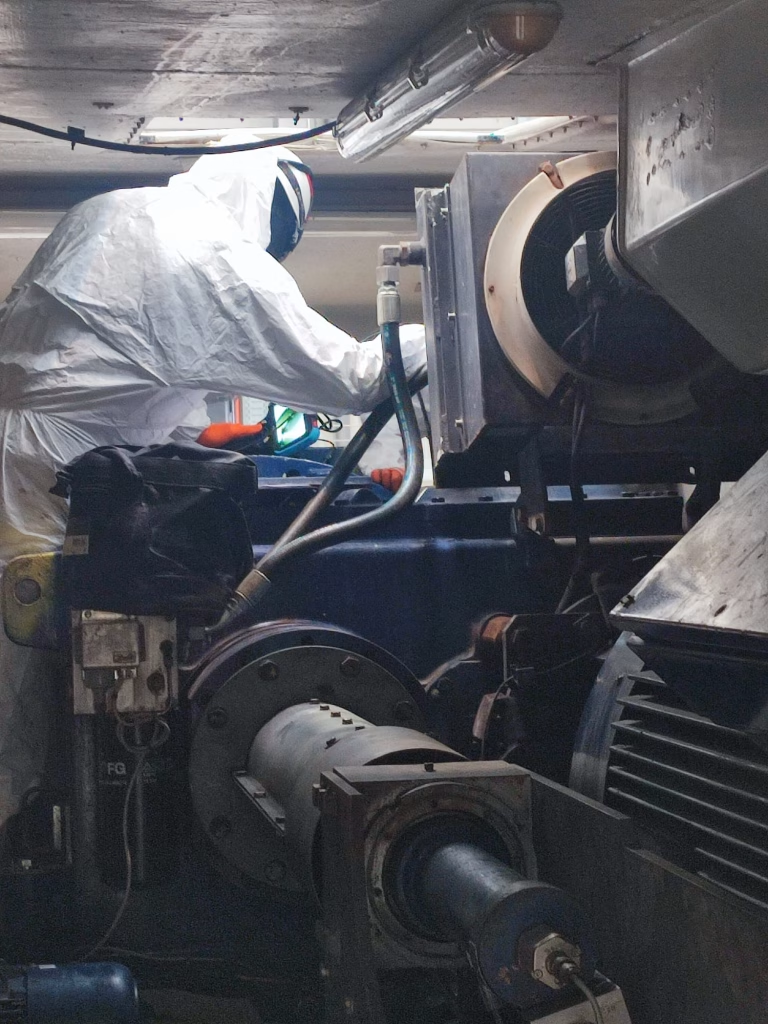
Wind turbines inspection and refurbishment are critical processes that take place after a wind farm is decommissioned. Before any turbine or component can be reused, stored or reconditioned, a detailed inspection is required to assess its structural condition, mechanical wear and system integrity.
Inspection: The Critical First Step After Decommissioning
- The structural condition of major components such as towers and hubs.
- The degree of mechanical wear and fatigue accumulated during years of operation.
- The condition of electrical and control systems after extended service.
Without structured inspection data that assesses actual operational condition, it is impossible to determine if a component is suitable for a second life in a new operational cycle, for sale in the secondary market, or for refurbishment.
Key Elements Assessed During Inspection
Industry practice is to focus evaluations on the most strategic turbine parts:
- Tower and structural integrity (including bolts, welds, and fatigue zones).
- Gearbox, generator, and drivetrain components — where wear is most pronounced.
- Auxiliary systems and safety devices — including brakes, yaw systems, and control electronics.
These inspections serve two essential purposes:
- Risk reduction — identifying components that could fail if re-deployed.
- Decision support — enabling asset owners to decide whether to reuse, refurbish, or recycle.
Lifecycle Outcomes After Inspection
Once inspected, components from decommissioned wind turbines can follow multiple paths:
- Reuse or refurbishing for redeployment in other wind projects.
- Storage for future resale as spare parts for maintenance, repairs, or refurbishment.
- Repurposing or recycling in industrial processes.
- Scrapping or waste management, where recycling is not currently viable.
Most of a turbine’s mass — up to 85 – 95 % — is recyclable using established waste-management practices, particularly metallic components like steel and copper. However, blades remain challenging to recycle because they are made from composite materials such as fiberglass or carbon fiber that resist breakdown.
The Importance of Inspection for Reconditioning and Secondary Markets
Inspection is not just a technical requirement — it is the foundation for value recovery in the wind energy supply chain. Accurate condition reports allow turbine components to be:
- Refurbished for a second operational life.
- Sold as high-value used parts in markets with strong demand for cost-effective replacements.
- Certified or graded for quality based on inspection outcomes.
Without proper wind turbines inspection and refurbishment, technical risks increase significantly during reuse or storage phases.
By conducting detailed inspections, wind asset owners and service providers can optimize lifecycle costs, minimize risk, and contribute to a circular economy in wind energy