Repairing, Refurbishing and Retrofitting: key differences in industrial and wind turbine maintenance
Retrofitting vs refurbishing vs repairing industrial equipment is a common source of confusion in industrial maintenance and the wind energy sector. Although these three approaches are often used interchangeably, they refer to very different processes with distinct objectives, costs and long-term results. Understanding the differences between repairing, refurbishing and retrofitting industrial equipment is essential for making strategic decisions about performance, reliability and asset lifecycle management.
Repairing industrial equipment: solving specific faults
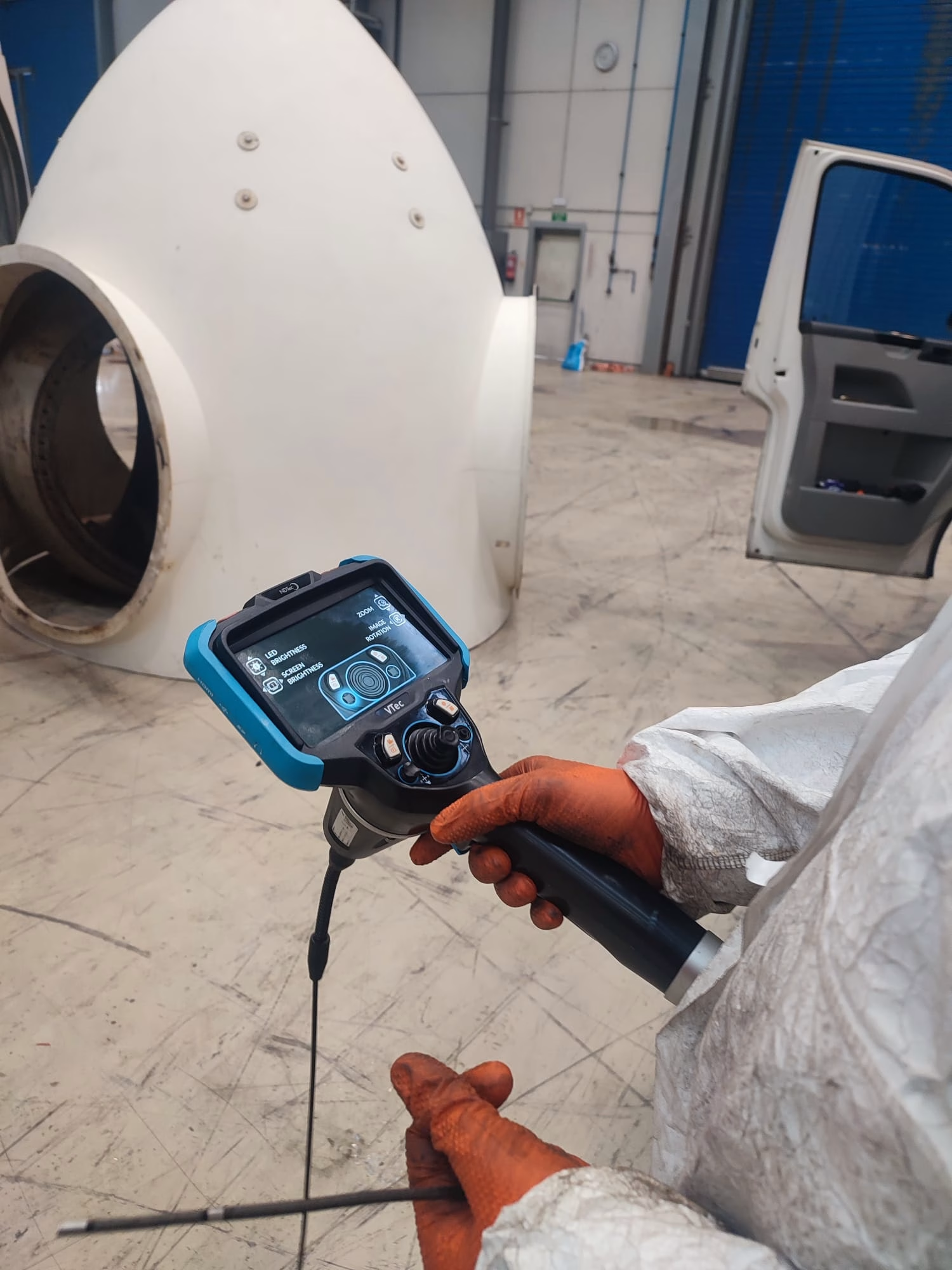
Repairing is the most basic level of intervention. It focuses on correcting a specific fault or damage in order to restore the equipment’s basic functionality. This may include inspections, targeted repairs or the replacement of damaged components. Repairing is usually a reactive solution: it solves an immediate issue but does not guarantee long-term performance, reliability or improved efficiency.
Refurbishing industrial equipment: restoring original performance
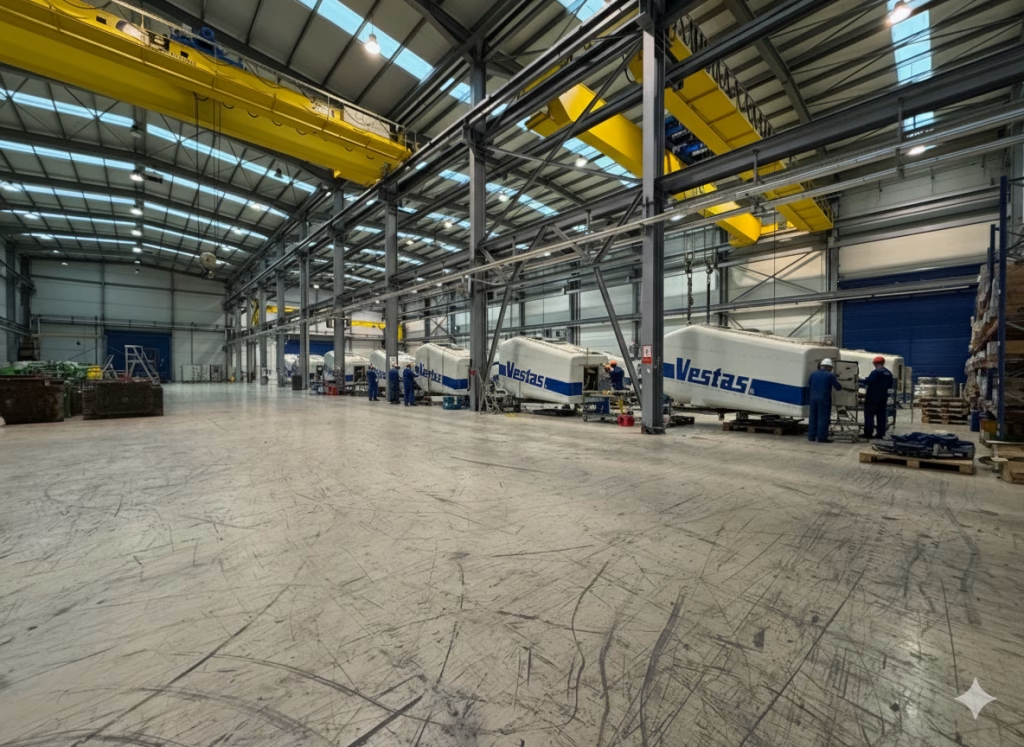
Refurbishing, also known as industrial reconditioning, is a much more comprehensive process. Its objective is to return the equipment to a condition comparable to its original state. Serious industrial refurbishment includes full servicing, replacement of critical components, exhaustive testing and performance guarantees close to those of new equipment.
Refurbished machines are expected to perform as they did when new, but without exceeding their original specifications. This approach extends the useful life of assets, reduces the need for new equipment purchases, improves operational safety and regulatory compliance, and promotes sustainability through asset reuse and the circular economy. Refurbishing provides long-term reliability and confidence in future performance.
Retrofitting industrial equipment: upgrading beyond original design
Retrofitting goes one step further. It focuses on updating and modernising equipment, particularly wind turbines, to improve performance, efficiency, safety or reliability. Through retrofitting, existing machines can incorporate new technologies or upgraded systems that were not available at the time of installation. As a result, the equipment can operate beyond its original design parameters, delivering measurable improvements in operation and added value.
Retrofitting vs refurbishing vs repairing industrial equipment: key differences
In simple terms, repairing solves a specific problem, refurbishing restores the equipment to its original performance with long-term reliability, and retrofitting upgrades the equipment to exceed its original capabilities. Each option serves a different strategic purpose, and the right choice depends on operational objectives, budget, sustainability goals and long-term asset strategy.
Choosing the correct maintenance and upgrade approach is key to maximising performance, reducing costs and ensuring reliable operation throughout the equipment’s lifecycle.
In conclusion, retrofitting vs refurbishing vs repairing industrial equipment represents three different strategies, each suited to specific operational, financial and long-term performance objectives.