The market for used wind turbines has gained visibility in recent years as a consequence of structural developments within the wind energy sector. This growth is not driven by short-term trends, but by operational, technical, and lifecycle-related factors that have emerged as the industry has matured.
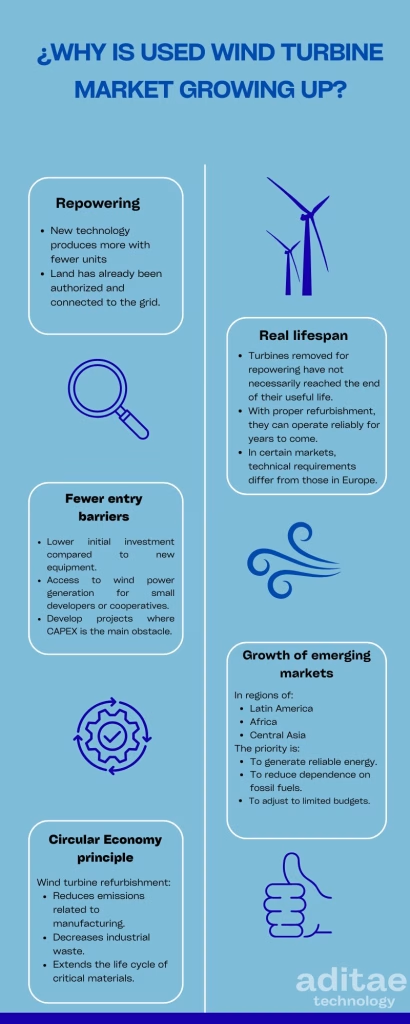
Repowering of Existing Wind Farms
One of the primary sources of used wind turbines is the repowering of existing wind farms. Repowering involves replacing older wind turbines wither newer models that offer higher capacity or improved efficiency.
As a result of these projects, turbines that are removed from service may still retain operational or component-level value, depending on their condition and operating history. This process naturally generates a supply of turbines and components that can be assessed for reuse, refurbishment, or dismantling.
Availability of Turbines with Remaining Technical Life
Wind turbines are complex industrial assets designed for long-term operation. In some cases, turbines removed during repowering or decommissioning processes still have components with remaining technical life, provided they meet applicable technical and regulatory requirements.
This has supported the development of a secondary market focused on:
The evaluation of used turbines and components
Selective reuse or refurbishment
Redistribution to projects with compatible technical needs
Development of Specialized Technical Services
The growth of the used wind turbine market has been accompanied by the emergence of specialized technical and logistical services, including:
Wind turbine dismantling and transport.
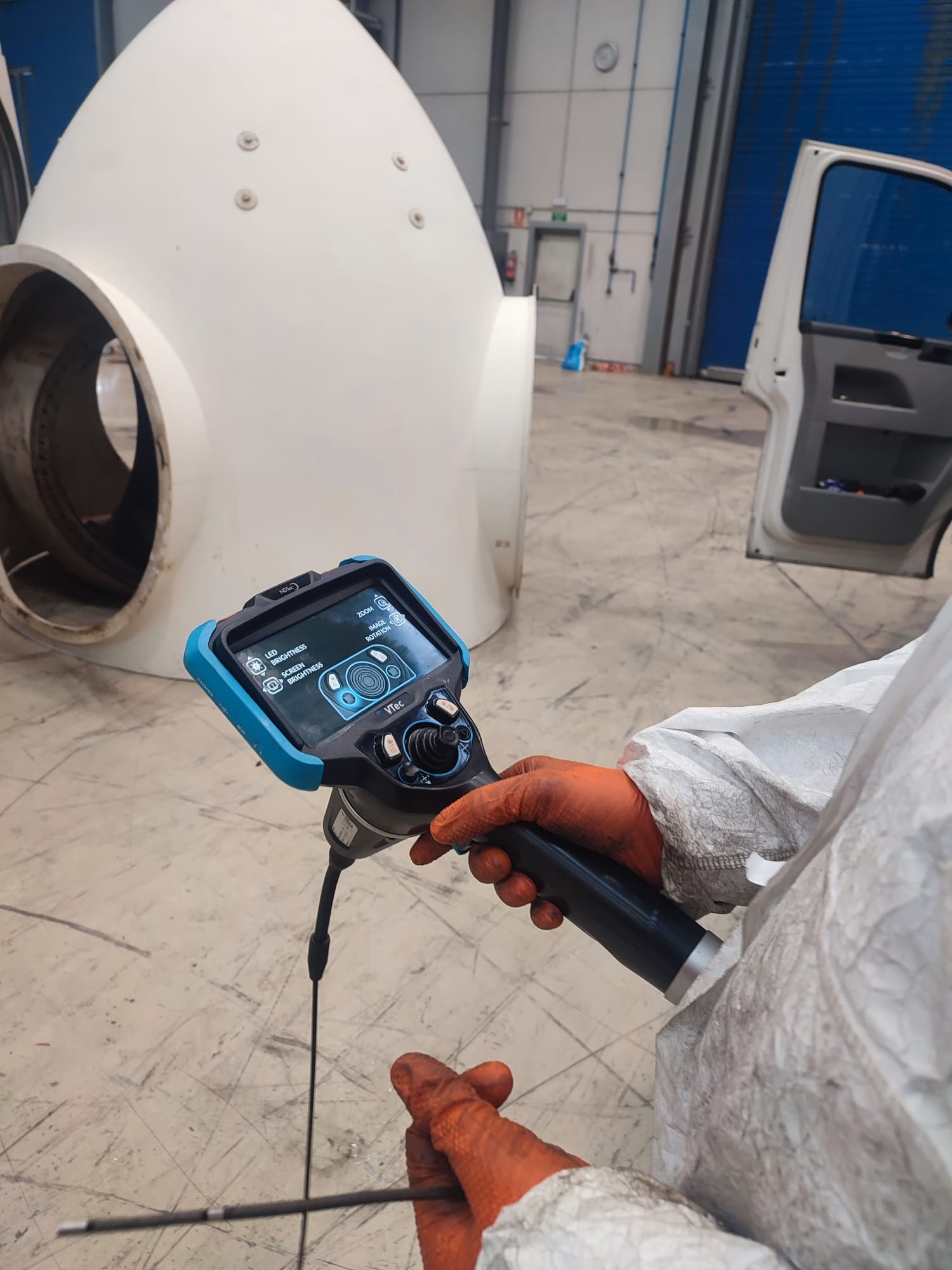
Technical inspection and condition assessment.
Component handling, storage, and refurbishment.
Supply of used or refurbished spare parts.
These services enable used turbines or components to be managed within an industrial framework, reducing uncertainty and supporting informed decision-making.
Application in Specific Project Contexts
Used wind turbines are typically considered in specific project scenarios, such as:
Partial replacements or extensions of existing installations
Smaller-scale wind projects
Markets where access to new equipment is limited
Applications with defined technical and budgetary constraints
In these contexts, the use of pre-owned equipment may form part of a broader technical or economic strategy, subject to compliance with local regulations and standards.
Alignment with Circular Economy Principles
The reuse and refurbishment of wind turbines are consistent with circular economy principles, which emphasize extending the useful life of industrial assets and reducing waste. Within the wind energy sector, this approach contributes to:
More efficient use of manufactured components
Reduced material disposal from decommissioned turbines
Improved lifecycle management of wind energy assets
While new turbine installations remain central to wind energy development, circular practices are increasingly considered as a complementary approach.
A Market Linked to the Maturity of the Wind Sector
The existence and growth of the used wind turbine market are closely linked to the maturity of wind energy deployment in certain regions, particularly where large numbers of turbines have reached mid-life or are being replaced through repowering initiatives.
Rather than replacing the market for new turbines, the secondary market operates as a parallel and complementary segment, addressing specific technical and operational needs.