Intelligent wind turbines cannibalisation is a strategic approach that maximizes turbine efficiency and sustainability. By reusing high-value components, operators can reduce downtime, cut maintenance costs, and extend the life of their wind farms.
It is true that without rigorous technical control, we run the risk of not achieving the desired results in wind farm operation and maintenance. Every action must be carefully planned and executed to ensure safety, efficiency, and long-term reliability.
However, cannibalisation is an approach that, when applied correctly, offers significant benefits.
Cannibalisation allows to:
-
Minimise downtime
Thanks to the immediate availability of replacement components;
-
Extend the useful life of a wind farm
Keeping turbines operational for longer;
-
Align with the principles of the circular economy
By reusing materials rather than discarding them;
-
Reduce operating and maintenance costs
Optimising resources and investments.
Despite some misconceptions surrounding cannibalisation, it is a well-established and thoroughly studied branch of the operation and maintenance sector. It is a strategic practice, not a shortcut, and it relies on precise technical knowledge and careful planning.
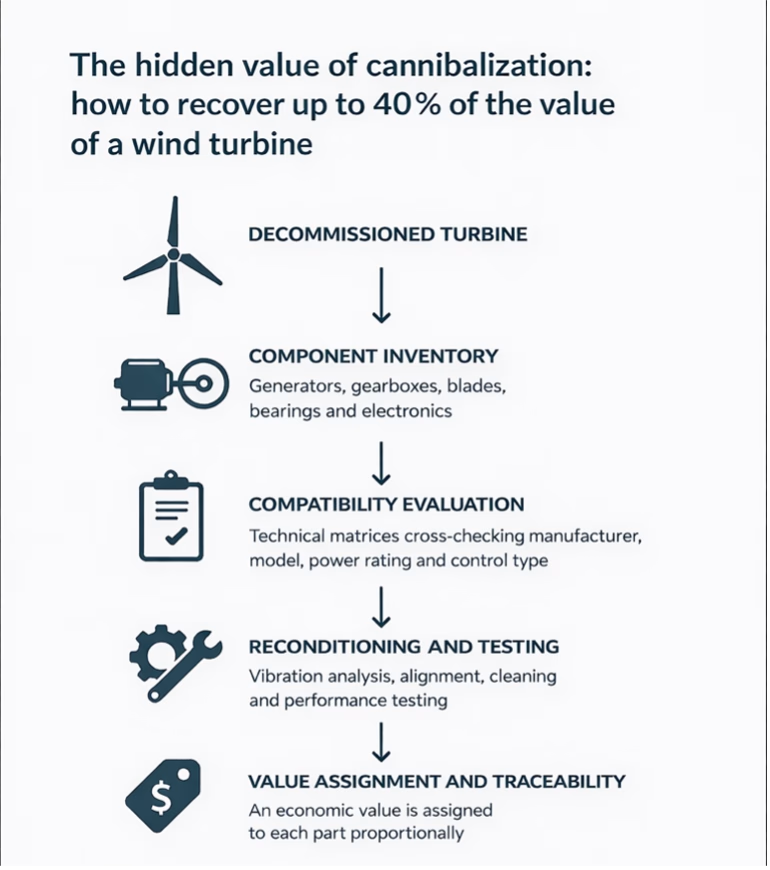
In fact, here is a striking figure: up to 40% of a machine’s value can be recovered even before it reaches the stage of dismantling and recycling.
The secret lies in 𝐢𝐧𝐭𝐞𝐥𝐥𝐢𝐠𝐞𝐧𝐭 𝐜𝐚𝐧𝐧𝐢𝐛𝐚𝐥𝐢𝐳𝐚𝐭𝐢𝐨𝐧—a method of extracting high-value components, such as generators, gearboxes, blades, and control systems, and reusing them in other compatible wind farms or turbines. By doing so, we transform parts from decommissioned or idle turbines into strategic assets.
This approach not only maximises the return on existing assets but also promotes sustainability and resource efficiency in the renewable energy sector. The technical process behind cannibalisation ensures that up to 40% of a turbine’s value can be preserved, making dismantled machines a vital part of ongoing operations rather than mere waste.
In the image below, we illustrate how this process works, showing the practical steps involved and the components that can be recovered for reuse.